The Isadore M. Fixman Historical Collections
History of the Institute Archives & Special Collections
Although the Rensselaer Institute Archives & Special Collections was formally established in 1970, efforts to document and preserve the Institute’s history date back to RPI’s earliest years. From the nineteenth century onward, Institute leaders recognized the importance of maintaining records that documented Rensselaer’s educational mission, scientific contributions, and institutional development.
One of the most significant early figures in this tradition was Palmer C. Ricketts, who served RPI as a student, professor, administrator, and president. Ricketts maintained extensive records of Institute activities and actively collected materials documenting RPI’s history. He also promoted the Institute through exhibitions and publications, including an alumni exhibit at the 1893 World’s Columbian Exposition in Chicago and the publication A Partial Record of the Work of Graduates. In 1895, he authored the first edition of History of the Rensselaer Polytechnic Institute, establishing an early model for institutional self-documentation. Evidence of Ricketts’s efforts is woven throughout the archival collections today, including correspondence from alumni reporting on their professional work and achievements.
The preservation of RPI’s historical materials continued into the mid-twentieth century with the founding of the Hiland G. Batcheller, Jr., Memorial Library in 1955. Established through the efforts of Trustee Hiland Batcheller and the Board of Trustees, the Batcheller Library was created to preserve and make accessible important books, manuscripts, and artifacts owned by the Institute or acquired through gift or loan. Located in Menands, the Batcheller Library safeguarded significant collections, including the personal libraries of Amos Eaton, three generations of the Roebling family, and Benjamin Franklin Greene, along with thousands of volumes documenting nineteenth- and twentieth-century science and technology. These holdings form the foundation of the Institute’s rare book collections today.
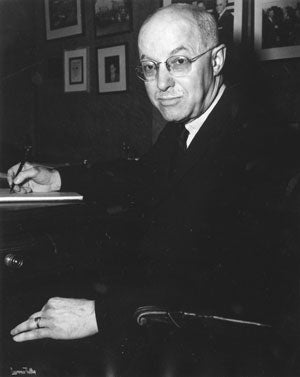
A decisive moment in the evolution of RPI’s archival stewardship came through the vision and advocacy of Isadore M. Fixman, Class of 1927, a trustee of Rensselaer Polytechnic Institute until his untimely death in September 1969. Fixman possessed a deep appreciation for Rensselaer’s historic role as a focal point in the rise of science and technology in the United States and held a particular reverence for the Institute’s founder, Stephen Van Rensselaer.
Guided by the conviction that future generations would recognize the far-sighted vision embodied in RPI’s founding, Fixman devoted himself to identifying, preserving, and assembling materials documenting the Institute’s origins. He diligently collected archives and artifacts relating to Stephen Van Rensselaer and the early history of the Institute, laying critical groundwork for what would become a formal archival program.
In recognition of Isadore Fixman’s vision and sustained service to Rensselaer, the University designated its accumulated historic manuscripts and documents—including the Van Rensselaer Collection developed by Fixman and later donated to the Institute by his widow, Mrs. Fannabell Fixman—as the Fixman Historical Collections. These materials form a core component of the Institute Archives & Special Collections and directly informed the establishment of the department following Fixman’s death.
Fixman’s vision was realized in 1970, when President Richard Folsom announced the establishment of the Institute Archives and Special Collections and appointed K. Jack Bauer as RPI’s first Institute Archivist.
Under Bauer’s leadership in the early 1970s, the Archives began the systematic identification, transfer, and preservation of official Institute records. He was succeeded by Elizabeth Stewart, then John Dojka, and later Jenifer Monger, each of whom expanded and professionalized the department’s operations, collections, and services.
In May 1982, the Board of Trustees formally adopted the Institute Archival Policy, affirming that records of enduring historical value generated by academic and administrative offices are the property of the Institute and may not be destroyed without the consent of the Institute Archivist. This policy established the Archives’ authority and responsibility for ensuring the long-term preservation and accessibility of RPI’s official records.
Today, the Institute Archives & Special Collections serves as the official steward of RPI’s historical record, preserving a broad range of materials that document the academic, administrative, and cultural life of the Institute from its founding to the present. In addition to institutional records, the department stewards significant special collections related to RPI alumni, faculty, and fields of study, extending the historical record beyond campus to document Rensselaer’s national and global impact. Through ongoing acquisition, preservation, and access, the Archives functions as a vital institutional resource, supporting research, teaching, and informed engagement with RPI’s past as it continues to shape the Institute’s future.